

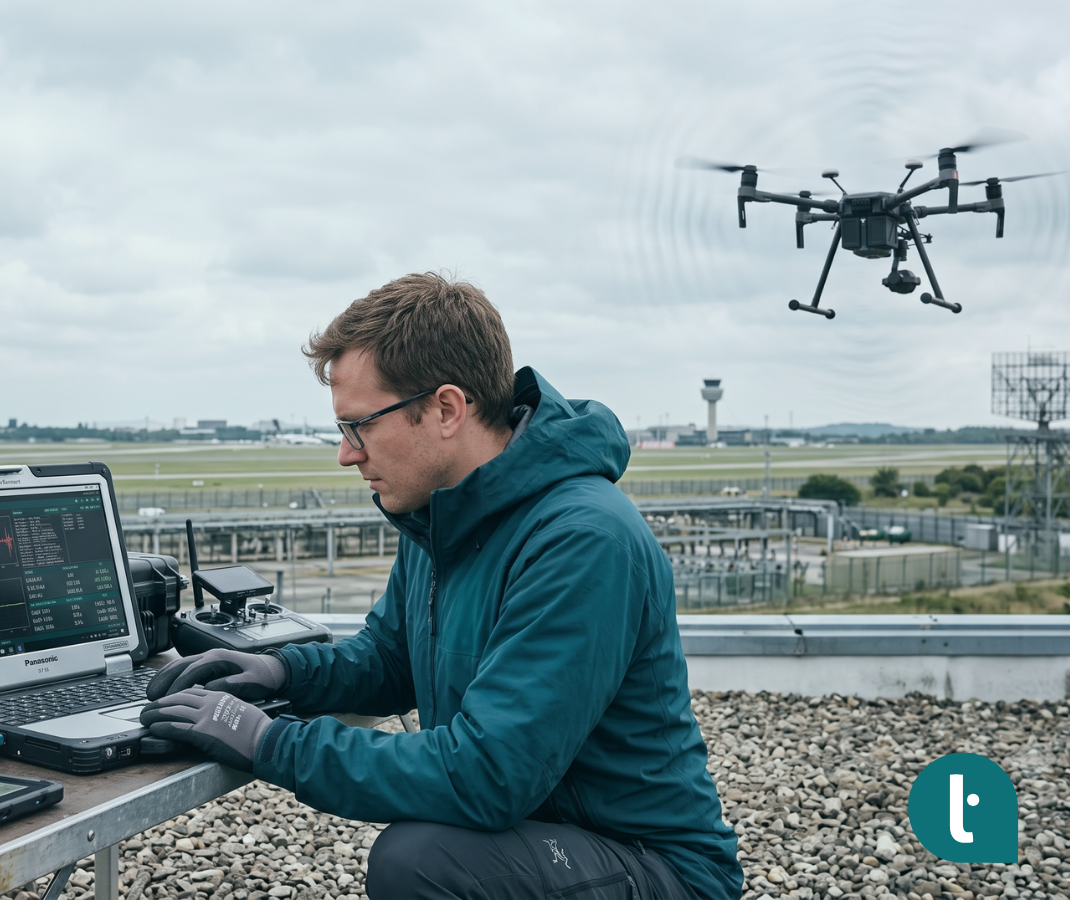
In recent months, Belgian and Dutch authorities scrambled to respond to a wave of drone sightings above sensitive sites: military bases, international airports and a nuclear research facility.
Flights across the region were cancelled. Anti-drone weapons were deployed. Governments pledged hundreds of millions in countermeasures. And in most cases, nobody could definitively explain where the drones came from or why they ended up there.
These incidents highlight a fundamental shift in modern defense: neutralizing drones is no longer about deploying expensive missiles, but about using electronic warfare, including GPS jamming, spoofing, and EMP disruptions. Spoofing is particularly dangerous, feeding falsified position data to force an aircraft off-course without triggering an immediate alert. As electronic countermeasures become the primary weapon to bring drones down (a reality already clearly demonstrated in conflicts like Ukraine) defending the drone’s internal systems and data integrity against these disruptions has become a crucial success factor.
This is not a hardware problem. It is an embedded software problem. And it is one that development teams can solve.
A problem close to home
The incidents across the Benelux paint a clear picture. In Belgium, drones were spotted above military bases including Kleine-Brogel, Florennes, Leopoldsburg and Schaffen. Flight operations at Brussels Airport were suspended following drone sightings. A drone was observed above the nuclear research centre in Mol. In the Netherlands, military airbases including Eindhoven and Volkel were targeted by unidentified drone activity.
An unmanned aircraft crashed on a school playground in Mechelen. What was clear is that the aircraft had ended up far outside its intended or permitted flight zones. GPS interference, in the form of jamming or spoofing, is one of the key mechanisms that can cause this to happen.
A pattern that cannot be ignored
The Benelux incidents do not stand alone. Spoofing incidents increased by 500% in 2024, driven in large part by the proliferation of modern drone warfare in Eastern Europe and the Middle East. According to IATA data, GPS signal loss events increased by 220% between 2021 and 2024. Poland alone reported 2,732 GPS jamming incidents in January 2025. Around 900 flights per day are currently affected by GPS interference globally.
These are not numbers from a distant conflict zone. They reflect a threat that is increasingly affecting commercial aviation, critical infrastructure and embedded systems across the region where Logic Technology operates.
A Dutch stake in the outcome
The Netherlands is not just dealing with the fallout of GPS interference. It is becoming one of the more active players in drone development itself. The government recently confirmed it will supply drones to Ukraine as part of NATO policy, a decision that puts Dutch-built systems directly into one of the most electronically contested airspaces on the planet. That is precisely the environment where jamming and spoofing are already routine, and where a single corrupted data write can be the difference between a mission completed and an aircraft lost.
Dutch and European manufacturers, from established industrial players such as VDL to newer aerospace ventures like Destinus, are shaping this next generation of drone platforms. Alongside existing European users of Logic Technology's solutions, including Airbus Defence & Space, they represent exactly the kind of engineering teams that need their data layer to hold up when external signals cannot be trusted.
Beyond GPS: How drones navigate when signals fail
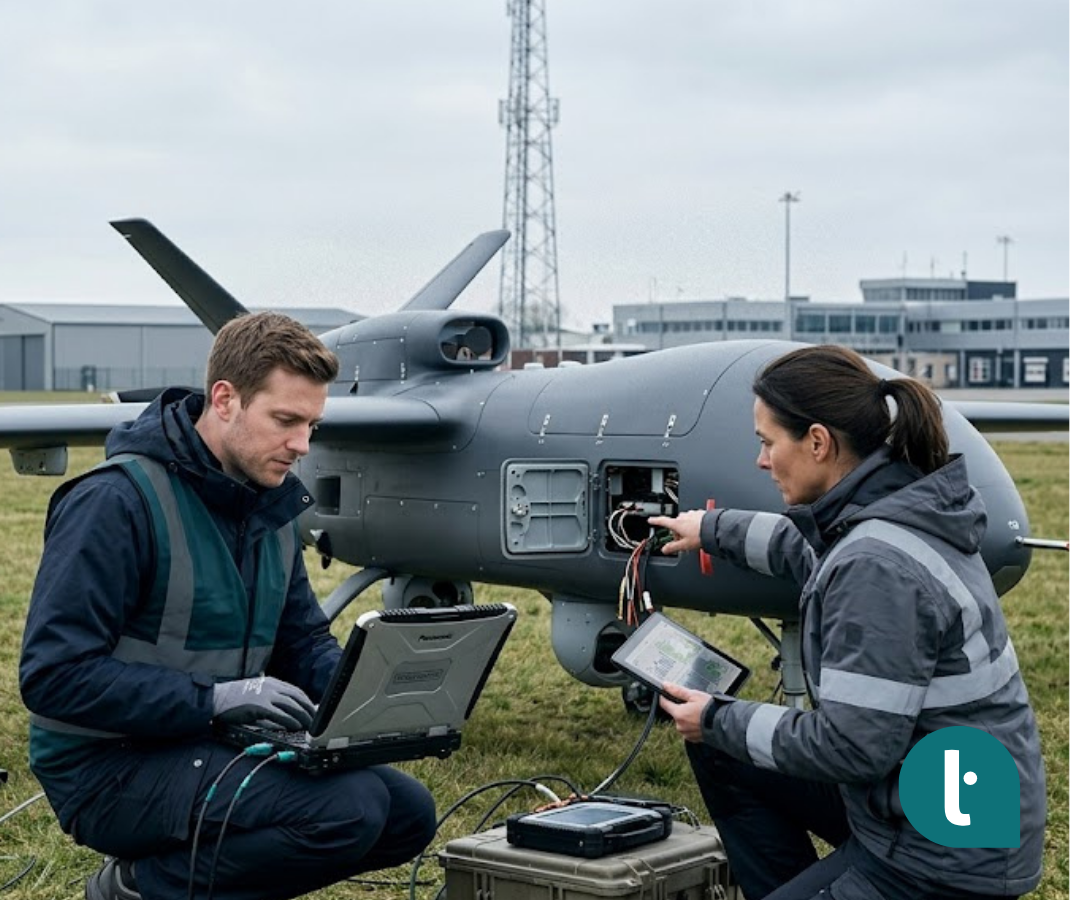
There is an important distinction between jamming and spoofing, and both present serious risks to drone systems. Jamming simply denies access to GPS signals, while spoofing actively manipulates the navigation system, causing a UAV to fly off-course, crash, or land in unauthorized locations. In the worst cases, spoofing does not trigger any immediate warning (the system believes it is operating correctly, while in reality it is being guided toward failure).
To maintain resilience when GPS signals are jammed or spoofed, modern autonomous and semi-autonomous drones rely on secondary navigation and communication mechanisms:
- Inertial Navigation Systems (INS): Using onboard gyroscopes and accelerometers to continuously calculate position and direction without needing any external signal.
- CRPA Antennas: Controlled Reception Pattern Antennas that actively block ground-level jammer signals while amplifying weak satellite signals from directly overhead.
- Optical Navigation & AI: Camera-based Terrain Contour Matching that compares live ground imagery against pre-loaded satellite maps.
- Autonomous Mission Capabilities: AI-driven image recognition for independent target identification, alongside pre-programmed Return-to-Home emergency protocols when communications are lost.
- Encrypted & Resilient Communications: Frequency Hopping (FHSS), directional antennas, and heavily encrypted data streams (AES-256) to protect telemetry and control links from interception or hijacking.
The fail-safe question: Protecting data integrity
This is where the real engineering challenge lies. Every single fallback mechanism (from pre-loaded satellite maps and AI recognition models to Return-to-Home coordinates, encryption keys, and encrypted flight logs) depends entirely on data stored locally on internal Flash or eMMC memory inside the drone's electronics.
While drone electronics feature physical shielding against Electromagnetic Pulses (EMP), protection is never absolute. High-intensity EMP disruptions, power surges, or directed-energy laser weapons (which can melt metal housings or burn electronics) can cause sudden data corruption, power loss or extreme physical disruption.
If onboard Flash or eMMC memory becomes corrupted during such an attack, all secondary navigation and emergency systems fail simultaneously. A drone cannot execute optical AI navigation if its satellite map is corrupted, nor can it execute an emergency Return-to-Home protocol if its stored parameters are compromised.
This is precisely where Tuxera Reliable File Systems (such as Tuxera EdgeFS, NitroFS and certifiable Reliance Assure™) become critical. Our software layer does not stop the jamming signal or laser beam itself (that remains a domain of physical and RF defense). Instead, we focus on protecting systems against the software and storage fallout that accompanies these attacks.
By utilizing transactional, deterministic file system design that never overwrites live data and always mounts to a known-good state after an uncontrolled power shutdown, Tuxera Reliable File Systems maintain the integrity of pre-stored maps, AI parameters, and emergency protocols. A compromised memory card or corrupted storage system can mean the difference between a drone executing a safe Return-to-Home recovery in friendly territory or crashing in a hostile zone. Ensuring data integrity under these severe conditions is a core element of our approach to increasing reliability, a priority shared across both the defence & surveillance and aerospace sectors.
What this means for your development stack
Building resilience against GPS, EMP or other interference is not solely a mechanical, hardware or RF problem. It begins in the embedded software layer. Development teams need to ask whether their system can detect inconsistencies between navigation inputs and inertial data, whether their failsafe logic has been formally verified, and whether the storage software stack can guarantee data integrity when external power or signals are compromised.
These are the questions that compliance frameworks such as DO-178C and aerospace safety standards are increasingly addressing, and they are questions that Logic Technology helps teams answer in practice, locally in the Benelux and across Europe.
There is always a Logic Solution !
Whether your team is building UAV platforms, aerospace navigation systems, or mission-critical embedded applications, we ensure your onboard data remains reliable even when external signals fail. As the Benelux distributor for leading embedded software vendors (including transactional file systems like Tuxera), Logic Technology delivers the local expertise and building blocks that keep your systems safe, resilient, and in control when the environment is not.
Contact us to discuss how we can support your aerospace development project.


Gevorg Melikdjanjan
Security | Reliability | Data Solutions
